


1. When the excavator is moving, the working device shall be put away as far as possible and close to the center of the machine body to maintain stability; Place the final drive behind in order to protect the final drive. Avoid driving over obstacles such as stumps and rocks as far as possible to prevent the track from twisting; If it is necessary to drive over obstacles, make sure that the track center is on the obstacles.
2. When crossing the mound, always support the chassis with the working device to prevent the vehicle from shaking violently or even overturning. Avoid idling the engine on a steep slope for a long time, otherwise poor lubrication will be caused by the change of oil level angle.
3. Long distance running of the machine will cause high temperature inside the roller and final drive due to long-term rotation, decrease in oil viscosity and poor lubrication. Therefore, it is necessary to stop the machine frequently for cooling to prolong the service life of the lower body. It is forbidden to excavate by the driving force of walking, otherwise excessive load will cause early wear or damage of final drive, crawler and other dismounting parts.
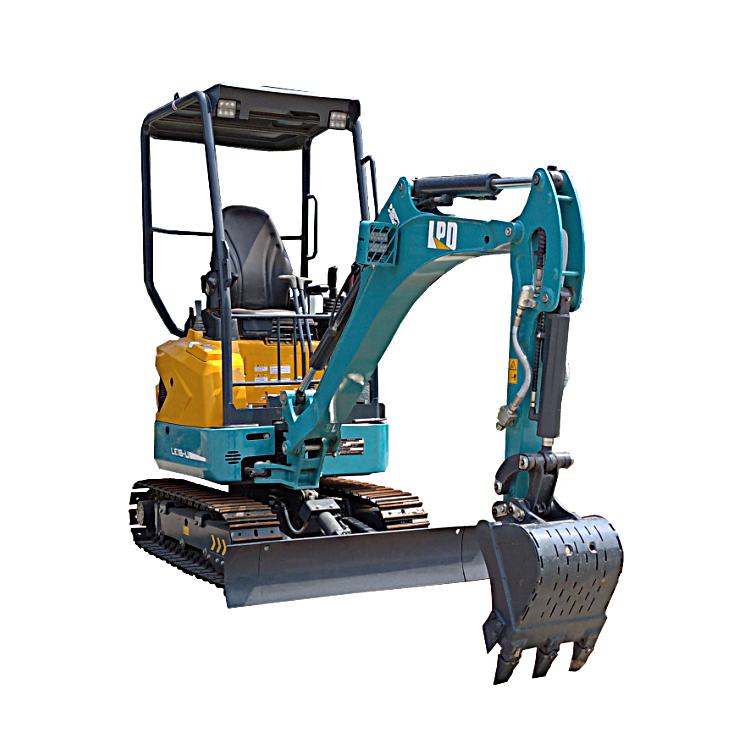
4. When walking uphill, the driving wheel should be behind to increase the adhesion of the ground contacting crawler. When walking downhill, the driving wheel should be in front and the upper crawler should be tightened to prevent the vehicle body from sliding forward under the action of gravity and causing danger when parking.
5. When walking on the slope, the working device should be placed in the front to ensure safety. After parking, gently insert the bucket into the ground and lower the stopper on the crawler.
6. When walking and turning on a steep slope, slow down the speed, turn the left crawler backward when turning left, and turn the right crawler backward when turning right, which can reduce the danger when turning on the slope.
7. The hydraulic cylinder is equipped with a buffer device, which can gradually release the back pressure near the end of the stroke. If the piston is subjected to impact load after reaching the end of the stroke, it will directly touch the cylinder head or the cylinder bottom, which is easy to cause accidents. Therefore, there should be clearance at the end of the stroke.
8. Bulldozing with rotary action will cause abnormal stress on the bucket and working device, resulting in distortion or weld cracking, and even pin shaft breaking. This operation should be avoided as far as possible.
9. Excavating by using the weight of the machine body will cause abnormal stress state of the slewing ring and strong vibration and impact on the chassis. Therefore, the hydraulic cylinder or hydraulic pipeline will be damaged greatly.
10. When loading and unloading heavy materials such as rock, it is required to unload near the bottom of the truck compartment, or load soil first and then rock. It is forbidden to unload at high altitude to reduce the impact damage to the truck.
11. After the excavator enters the construction site, the driver should first observe the geology of the working face and the surrounding environment. There should be no obstacles within the rotating radius of the excavator to avoid scratching or damage to the vehicle.
12. During operation, confirm the front rear direction of the crawler to avoid tilting or impact. When the track is deeply immersed in the mud, place a wooden board under the bucket, support the track with the bottom end of the bucket, and then place a wooden board under the track to drive the machine out.
13. Try not to face the final drive in the excavation direction, otherwise the traveling motor or hose will be easily damaged. During operation, ensure that the left and right crawlers are in full contact with the ground to improve the dynamic stability of the whole machine.


